
Your ground segment.
Your rules.
IRMI™, the Image Resource Management Intelligence system, is a multi-mission, confederated satellite ground segment that brings cataloguing, archiving, processing, and delivery together in one system, giving operators full freedom of use.
A complete ground segment, not a point tool
IRMI™ combines catalogue, archive, processing, and delivery in one configurable ground segment, with a federation layer that can connect selected products across operators, partners, and nations.
Catalogue
The spine of the system: an append-only, signed record of every product and its history.
Archive
Fast and long-term storage across on-premises systems, cloud infrastructure, or both.
Processing
The full chain from raw payload data to calibrated, standards-aligned products.
Delivery
Catalogue interfaces, web-GIS access, and standard product packages for users and clients.
Federation layer
Connect IRMI™ instances so selected products can be shared under contracts the operator controls.
From raw payload data to decision-ready products
IRMI™ turns raw mission data into calibrated, standards-aligned outputs, then into product tiers your customers, partners, and internal teams can use.
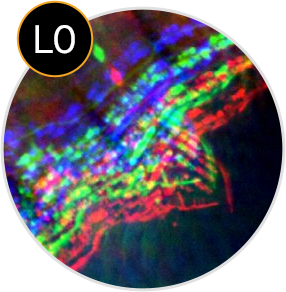
Unprocessed satellite payload data.
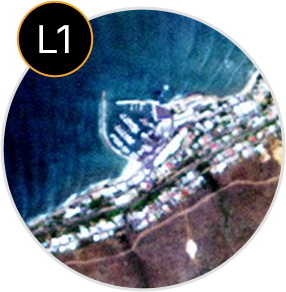
Radiometric and geometric correction applied.
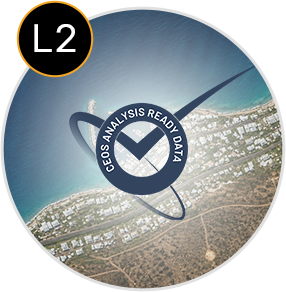
Analysis Ready Data compliant with CEOS ARD.
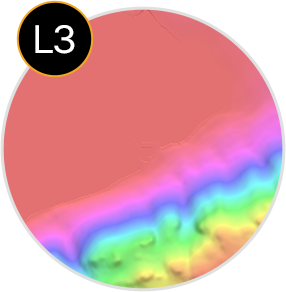
Curated, reliable outputs for decision-making.
Join a confederated ecosystem, keep control
IRMI™ is designed so operators can connect selected products across trusted partners without centralising their ground segment or giving up control of their data.
Connections are permissioned. You decide what to share, with whom, and under which terms.
Sovereignty by default
Your deployment stays isolated unless you choose to publish selected products.
Signed publication contracts
Each share runs under explicit terms that define what passes between instances.
Flexible sharing modes
Support full copy, on-order, approval-based release, or metadata-only discovery.
Market reach without centralisation
Widen access to your products while keeping operational control of your data.
Built for verification, audit, and controlled exchange
IRMI™ is designed for operators who need confidence that data stays under their control, product history cannot be quietly changed, and results can be reproduced and verified.
Tamper-evident catalogue
Every record sits in a signed, append-only log so product history cannot be changed without detection.
Verifiable provenance
Each product carries a fingerprint from the software and inputs that created it.
Reproducible
builds
Deployments from the same release can be reproduced for audit, testing, and fault resolution.
Offline and air-gapped capable
Instances can synchronise online or through signed bundles for disconnected environments.
Protocol-level sharing controls
Access scopes are enforced below the user interface, so partners cannot see beyond the contract.
Signed delivery ledger
A transactional record shows what was delivered, under what terms, and to which partner.
Security is built into how IRMI™ records, verifies, reproduces, and synchronises products.
Run the same ground segment where your mission needs it
IRMI™ can be deployed across edge hardware, single-server systems, private cloud, public cloud, and onboard environments while preserving the same core interfaces.
One platform. Any environment.
Consistent interfaces, security, and operations across every deployment model.
Edge hardware
Process close to the sensor when latency, field deployment, or local control matters.
Single server
Run a complete IRMI™ instance on dedicated infrastructure for controlled mission operations.
Private cloud
Operate inside your secure cloud environment with infrastructure your team controls.
Public cloud
Scale processing and delivery capacity as mission volume grows.
Onboard environment
Support spacecraft-side deployment paths where mission architecture requires processing closer to the payload.
Licence and run IRMI™ your way
Choose the licence, deployment, and operating model that fits your mission stage, funding source, infrastructure, and commercial goals.
Module licence
Licence only the IRMI™ processing modules your mission needs.
Site licence
Operate IRMI™ on your own infrastructure, under your control.
Source-code licence
Access source code for deeper control, customisation, and deployment flexibility.
Service delivery
Have EOIntelligence process your data and deliver finished products.
Built for teams that need to fly missions, not maintain pipelines
Building a ground segment is a mission in itself. IRMI™ gives NewSpace teams a complete, proven system they can own and run their way: catalogue, archive, processing, and delivery, from a single server to a constellation to onboard deployment. Your data stays under your control, every product can be verified, and the system is designed to be reproduced and audited.
Own the ground segment
Run IRMI™ on your infrastructure, your licence, and your terms.
Produce from first image
Prepare processing, calibration, and delivery before mission data starts arriving.
Scale without giving up control
Grow from one deployment to wider operations while keeping sovereignty intact.
Ready to configure IRMI™ for your mission?
Talk with EOIntelligence about your payload, data requirements, processing environment, licence model, and delivery needs.